- Japanese
- English
Technologies driving the power system of the future with new energy resources
At Hitachi Energy, we believe that electricity will be the backbone of the entire energy system. We are championing the urgency and the pace of change needed to reach Net Zero and are developing and deploying technologies that are needed to help make the world’s energy system more sustainable, flexible, and secure. The urgent energy transition requires us to build an energy system that is different from what we have today and to achieve this, we need to collaborate across sectors and stakeholders.
As we know, electricity demand is increasing rapidly due to increased electrification across all sectors, proliferation of electric vehicles and transportation, increased building heating and cooling, data centers and industrial processes. In the global power system of 2050, we need around four times the power generation capacity and we will need to transfer up to three times as much electrical energy compared to 2020. We need to have a carbon-neutral energy system by 2050 and we want to put forward an urgent call for accelerating the power system ramp up. The technology to start such scaling is available, the further required technologies can be developed while ramping up.
There are three fundamental technology areas that are driving the evolution of the power system and enabling the energy transition. They are sustainable products & solutions, power electronics and digitalization.
Sustainable Products & Solutions: We need to look at the total solutions and lifecycles, as well as the functionality that we have today. We will also need to consider the changing environmental conditions so that we develop technologies that are more robust compared to before. For instance, some countries are now facing extreme weather conditions that have not been experienced in the past.
Power Electronics: For the power system to evolve, power electronics are vital, and the inverter-based resources are everywhere. Nevertheless, the control of those millions of inverters is not at the level where it is standardized and just plug-and-play. Therefore, we need to take care of network stability, but also power quality (e.g., voltage quality, frequency, system inertia). We are also marching towards embedded DC grids and meshed approaches, requiring vendors to collaborate to enable interoperability.
Digitalization: The large number and wide variety of assets in the electrical grid requires new approaches to manage a much more complex power system in a reliable and secure way. Digital technologies, like machine learning and further AI technologies can help create concepts that e.g. take us from time-based to condition and reliability-based maintenance. We also need to be able to assess the status of the existing assets and integrate new type of assets in a secure, reliable and resilient manner. Decarbonization will transform our energy system in the future, leading to a ‘system of systems’ which must be integrated and managed. The only way to manage this is through digitalization, while managing and optimizing today’s operations.
As organizations across the world, supported by initiatives such as the RD20 Conference, focus on developing new and innovative technologies that can help realize a carbon-neutral energy future, the power system must evolve to become more flexible to integrate new renewable energy sources and meet the growing demand. Power systems must have efficient, much more controllable transmission and distribution, and flexible storage of energy to support grid inertia and resilience during intermittency. The power system must work as one grid across borders in any region, and at the same time have the ability to connect on and off for defined sub-grids during contingency conditions.
The concepts and technologies coming out of RD20 can be adapted and developed further by industries into products and systems. However, with the energy mix and footprint (from power generation to demand) of each country (under G20) being different from each other, RD20 can serve as a collaborative platform among countries, policy makers and industries to apply the technologies and co-create the carbon-neutral energy system of the future.
The urgent energy transition is a global challenge and together we can make a difference. We need to act now and deploy technology at scale and with speed, so that we can continue to advance a sustainable energy future for all.
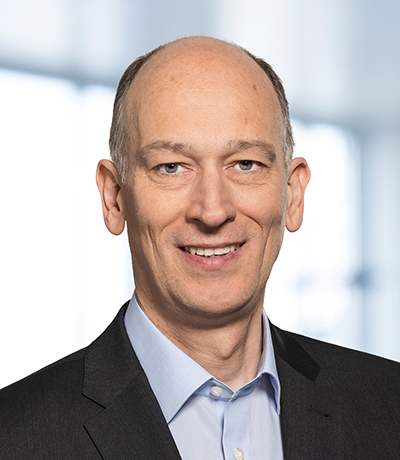
Chief Technology Officer, Hitachi Energy
Dr. Gerhard Salge is an Executive Vice President and Chief Technology Officer at Hitachi Energy. He joined Hitachi Energy’s predecessor in 1999, working within Corporate Research. From 2005 to 2014, he had several roles within the Medium Voltage Products Business Unit. In 2015, he became Global Head of Technology for Power Products, then Business Chief Technology Officer - CTO for Power Grids in 2016. Dr. Salge holds an MSc and a PhD in Electrical Engineering from RWTH Aachen University, Germany.